• Application of hydraulic nuts
    Apr 10, 2026 Application of hydraulic nuts
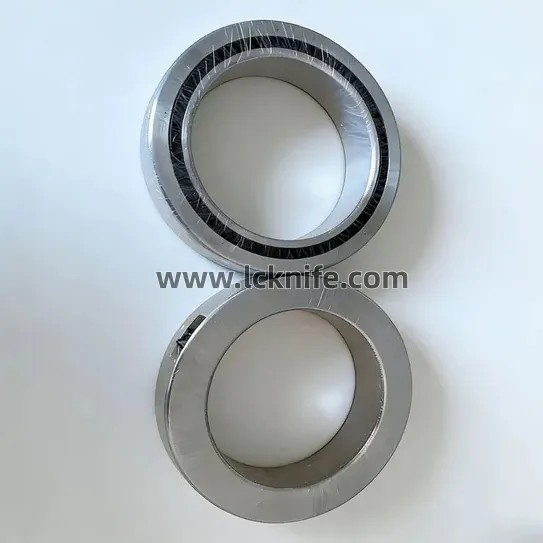
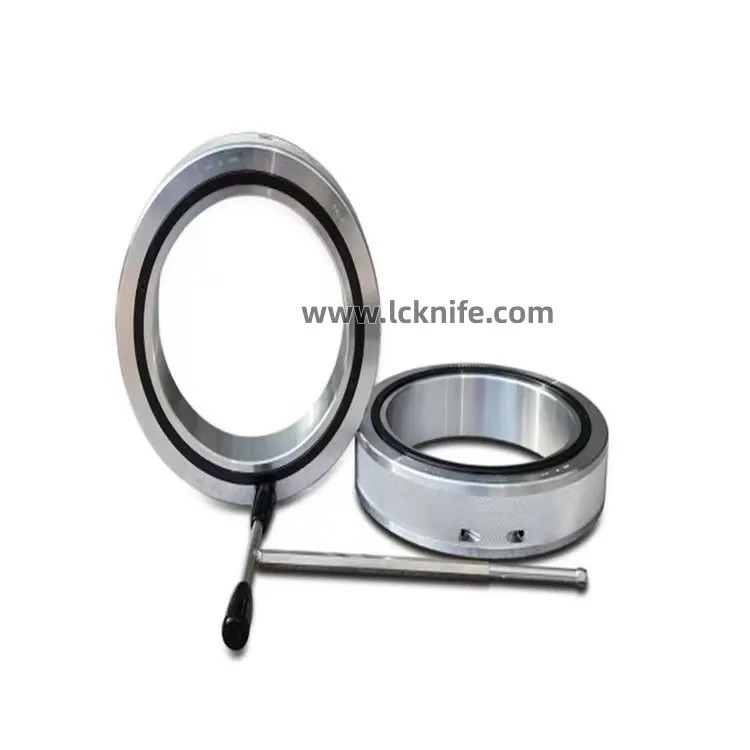
    1. Hydraulic nuts are widely used in the metallurgy of copper and aluminum metals, the paper industry, hydraulic locking on slitting machines, etc.; 2. Installation and removal of propellers, rudder bearings, etc.; 3. Removal of high pressure joint surfaces, such as train wheels, couplings, flywheels, and gears. Hydraulic nuts are an advanced bolt assembly method, particularly suitable for fastening in narrow spaces and on heavy-load vibrating machinery. The working principle of a hydraulic nut is to use a hydraulic cylinder to directly apply external force to the bolt, causing the bolt to stretch within its elastic deformation range. After the bolt is stretched, the locking ring on the hydraulic nut is tightened, which locks the bolt in the stretched position.
    View More
  • What is Leveling Roll
    Apr 10, 2026 What is Leveling Roll
    Leveling rollers are the core components of a leveling machine, and their design and material selection directly affect the performance and efficiency of the machine. Leveling rollers are usually made of alloy steel, with a surface hardness of HRC58-62, offering wear resistance three times higher than ordinary steel.  The roller spacing adjustment is driven by an electric screw, with an accuracy of up to 0.01mm, suitable for processing sheets with thicknesses of 0.3-20mm. The number of rollers, roller diameter accuracy, and roller spacing adjustment accuracy are all key technical indicators critical to the leveling performance of the machine.
    View More
  • Shear blades require tempering after quenching to achieve the necessary balance of strength and toughness
    Apr 09, 2026 Shear blades require tempering after quenching to achieve the necessary balance of strength and toughness
    Shear blades typically require tempering after quenching to achieve the necessary balance of strength and toughness. Most customers focus their inspections on hardness results and the number of tempering cycles, but rarely analyze the shear blades from the perspective of hardenability. The hardenability and the width of the hardenability band depend primarily on the precise control of the steel's chemical composition and its chemical uniformity. Ensuring the production of "hardenability-guaranteed" steel is essentially a matter of solving metallurgical quality issues: Precision of chemical composition and steel purity are significantly improved. Chemical segregation and banded structures are minimized. Component segregation leads to a wide dispersion of hardenability and inconsistent hardness. Meanwhile, banded structures have a severe negative impact on heat treatment deformation and overall performance.
    View More
  • The performance differences between 3Cr-H13 steel and traditional H13 steel
    Apr 09, 2026 The performance differences between 3Cr-H13 steel and traditional H13 steel
    The performance differences between 3Cr-H13 steel (with Chromium content reduced to 3%) and traditional H13 steel (with 5% Cr content) were compared. Microstructural and phase composition analyses were conducted using SEM, TEM, and XRD to investigate the influence of Chromium on the properties of H13 steel. The results indicate that reducing Cr content significantly improves the tempering stability and high-temperature strength of H13 steel. This improvement is primarily attributed to the degree of martensite recovery in the tempered structure and the specific types of secondary carbide precipitation.Traditional H13 Steel: When tempered at 650°C, the martensite undergoes nearly complete recovery, leading to a significant drop in matrix strength. Large quantities of near-spherical Cr7C3 and M6C carbides precipitate along the original martensitic lath and grain boundaries, weakening the secondary phase hardening effect.3Cr-H13 Steel: After tempering at 650°C, the matrix retains its lath martensite structure with a high dislocation density. Simultaneously, a large volume of fine, dispersed, short-rod-shaped VC (Vanadium Carbides) precipitates within the laths. These carbides provide dispersion strengthening and pin the dislocations, delaying martensite recovery and thereby enhancing high-temperature performance.These blades are ideally suited for hot shearing of medium-to-thick plates and billets in steel mills. Licheng knife: Tailor-made, cost-effective solutions with one-on-one specialized service for every client!
    View More
  • 51CrV4 is an alloy spring steel that offers excellent cost-effectiveness
    Apr 09, 2026 51CrV4 is an alloy spring steel that offers excellent cost-effectiveness
    51CrV4 is an alloy spring steel commonly used to manufacture large-scale shear blades due to its high cost-effectiveness. However, oxidation and decarburization during hot forging and heat treatment can severely impact quenching hardness, lead to quenching cracks, and reduce durability. To mitigate these issues, it is recommended to: Increase machining allowance appropriately during blanking and forging. Utilize a lower softening temperature post-forging as a substitute for standard annealing. Extend preheating time while shortening the holding time at the quenching temperature for large-scale blades. Apply protective coatings prior to quenching to prevent surface damage. Licheng knife: Quality stems from every overlooked detail!
    View More
  • Nanjing Spring Break: Embracing the Season in the Ancient Capital
    Apr 02, 2026 Nanjing Spring Break: Embracing the Season in the Ancient Capital
    In 2026, Nanjing officially introduced a "Spring Break" policy for primary, secondary, and higher education, linking the first week of April into a six-day extended holiday. This is more than just a break from academics; it is an invitation from the ancient city of Jinling to witness the peak of spring. At this moment, the "Spring at Niushou Mountain" is a tapestry of lush greenery, and the cherry blossoms at Jiming Temple drift like fallen snow. Strolling along the banks of Xuanwu Lake, tender willow branches brush the water while the purple peaks of the Zhongshan Mountains reflect in the ripples. This rare spring break allows people to step away from the rigorous pulse of industry to touch the profound history of the Stone Elephant Road or savor the seasonal sweetness of a qingtuan (green rice ball) in the alleys of Laomendong. "To do a good job, one must first sharpen one's tools." While study and manufacturing require precise edges, life requires an occasional "blank canvas." These six days of spring break serve as the perfect whetstone for the soul, allowing us to recharge our strength amidst the fragrance of flowers and the wisdom of books.
    View More
  • Design Flaws of Hydraulic Swing Beam Shears
    Apr 02, 2026 Design Flaws of Hydraulic Swing Beam Shears
    The design of the hydraulic swing beam shear inherently possesses several structural deficiencies: Linearity & Deformation: The blade carrier itself is arc-shaped, relying on arc-point contact to maintain the straightness of the sheared material. However, the force application point on the carrier and the cutting force on the blade are not aligned and are separated by a significant distance. Over long-term operation, this makes the carrier susceptible to fatigue and deformation, leading to severe "blade deflection" and resulting in burred edges on the cut. Mechanical Play: The bearing connection between the swing arm and the frame body typically has excessive clearance, often exceeding 0.10mm. Efficiency & Versatility: The shearing angle is fixed and non-adjustable, meaning the machine operates the same way for both thick and thin plates, which is both time-consuming and energy-inefficient. Material Distortion: The diamond-shaped blade design tends to cause "twisting" or "spiraling" of the sheared material; the narrower the workpiece, the more severe the distortion. Conclusion: "To do a good job, one must first sharpen one's tools." Selecting a high-quality shearing machine is the only way to push the performance of premium shear blades to their absolute limit.
    View More
  • The reason for the large size of the blade design of the shearing machine
    Mar 31, 2026 The reason for the large size of the blade design of the shearing machine
    Gantry shear blades operate under severe conditions and endure significant stress, necessitating large design dimensions—typically with a thickness of ≥40mm.In the current market, where competitive bidding is often disorganized, some manufacturers attempt to reduce costs by using 55SiCr flat steel. However, as thickness increases, the rolling force struggles to penetrate the core of the flat steel. This results in minimal plastic deformation at the center, leaving metallurgical defects—such as gas pockets, inclusions, and porosity—unresolved. Consequently, the mechanical properties of the blades are substantially compromised.
    View More
first page 1 ... 3 4 5 6 7 ... 12 last page

A total of 12 pages

Newsletter

Please read on, stay posted, subscribe, and we welcome you to tell us what you think.

Leave a message
welcome to Licheng
If you are interested in our products and want to know more details,please leave a message here,we will reply you as soon as we can.

Home

Products

about

contact