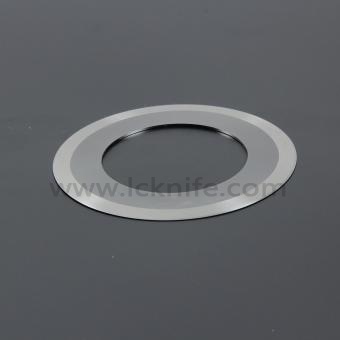
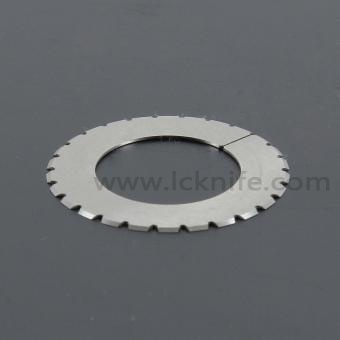
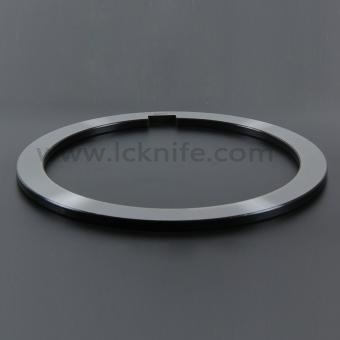
• The uncoiling and cross-cutting production line has a high cutting speed and efficiency
    Mar 09, 2026 The uncoiling and cross-cutting production line has a high cutting speed and efficiency
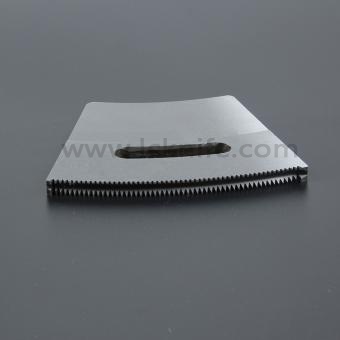
    The uncoiling and cross-cutting production line has a high cutting speed and efficiency. For a fixed length of 2 meters, it can cut 25-35 times per minute, and for a length of ≤500mm, it can reach as many as 80 cuts per minute. In addition, the uncoiling and cutting material diversity is wide, including low-yield-strength tinplate and galvanized sheet, as well as high-strength stainless steel, weathering steel, and high-strength automotive plates. The work intensity of uncoiling and cross-cutting is high; some factories operate 2-3 shifts, cutting 10,000 to 20,000 times per day! This places extremely high demands on the durability and applicability of the cutting blades. The selection of blade materials and heat treatment process is paramount, but the precision manufacturing process of the blades is many times more sophisticated and complex than that of ordinary shearing blades.
    View More
  • Happy International Women's Day to every woman!
    Mar 08, 2026 Happy International Women's Day to every woman!
    To Every Radiant Woman: A Tribute to International Women's Day As the warmth of spring begins to bloom, we welcome a day dedicated to honoring both gentleness and strength. Womanhood has never been defined by a single color. She is the decisive leader in the boardroom, the steadfast anchor of the family, and the dreamer who never stops chasing the light. On this day, we are not just celebrating a gender; we are honoring an uncompromising spirit of resilience and independence. May you have the strength to "grow upward": Stand tall like a tree to touch the distant stars—unbound by definitions and unconstrained by limits. May you find the peace to "look inward": Regardless of the noise outside, always keep a heart that loves itself fiercely and embraces every facet of who you are. Happy International Women's Day to every woman! May your eyes sparkle with laughter and your dreams be filled with light. May your efforts be rewarded and your life be filled with love. Through the long passage of time, may you be more than just someone’s shield—may you forever be your own radiant self.
    View More
  • Reasonable forging of the cutting blade material can break the columnar crystals
    Mar 05, 2026 Reasonable forging of the cutting blade material can break the columnar crystals
    Reasonable forging of cutting-edge materials can break up columnar grains, reduce macrosegregation, transform the as-cast structure into a forged structure, and, under appropriate temperature and stress conditions, weld internal voids to improve the material’s density. After forging, the ingot forms a fibrous structure. Through further rolling, extrusion, and die forging, the forging obtains a rational distribution of fiber flow direction. Forging also helps to control grain size and uniformity, improve the distribution of secondary phases (such as alloy carbides in ledeburitic steels), and achieve deformation strengthening or deformation–phase transformation strengthening of the microstructure.
    View More
  • Scrap metal shearing requires high quality shear blades
    Mar 05, 2026 Scrap metal shearing requires high quality shear blades
    Scrap metal shearing operates under harsh working conditions, which places high demands on the quality of the shear blades, particularly in terms of strength and toughness. H13 is an alloy tool steel. Because it contains a large amount of alloying elements, it has excellent hardenability. After quenching, a considerable amount of retained austenite often remains in the microstructure. This retained austenite continues to transform into martensite only during the cooling process after tempering, which is known as “secondary quenching.” After the first tempering, the formation of new martensite generates new internal stresses. In addition, some retained austenite may still remain untransformed. Therefore, a second tempering or even a third tempering treatment is required. The tempering temperature is generally between 550–600°C, and the tempering time depends on the furnace load and the effective thickness of the blades.
    View More
  • The Key Role of Double Shaft Shredder Blades in Solid Waste Treatment
    Mar 05, 2026 The Key Role of Double Shaft Shredder Blades in Solid Waste Treatment
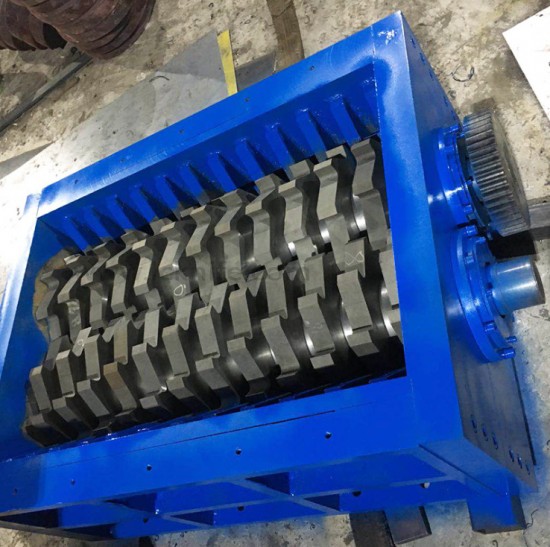
    Double shaft shredder blades are essential for solid waste treatment. They increase processing speed and aid resource recovery in three main ways: Firstly, these blades drive efficient crushing. Solid waste, such as household garbage, industrial waste, and old appliances, varies in shape and hardness. High quality blades with sharp edges and well-designed teeth grip and cut materials, quickly shearing waste into uniform particles. Crushing efficiency rises 20%-30% compared to ordinary blades, shortening cycle times. Secondly, high quality blades ensure consistent resource recovery. Their wear resistance and precision deliver uniform crushing, preventing over- or under-processing. As a result, they provide reliable raw materials for subsequent sorting and recycling, supporting processes like plastic regeneration and metal extraction. Consistent performance helps minimize secondary resource recovery costs. Finally, this property is the cornerstone for stable operation. Double shaft shredder machines use two parallel rotating shafts with intermeshing blades to cut materials. These shredders often run 24 hours a day. The blades must handle high-impact loads during solid waste cutting. Blades made from high-toughness, wear-resistant materials reduce chipping and equipment faults. This limits downtime, supports continuous operation, and reduces production losses. Choosing the right Double shaft shredder machine blades improves the efficiency of solid waste treatment. It also helps enterprises achieve reduction, harmless treatment, and resource recovery. These blades are indispensable to the waste treatment process.
    View More
  • LiCheng wishing you a joyous Lantern Festival
    Mar 03, 2026 LiCheng wishing you a joyous Lantern Festival
    As the first full moon of the Year of the Horse graces the night sky on this 2026 Lantern Festival, the world is bathed in a warm, festive glow. Tonight, streets are adorned with countless glowing lanterns, each one a beacon of hope and joy. Families gather around steaming bowls of tangyuan, their round shape a perfect symbol of unity and completeness. As you savor the sweet, glutinous treat, may it melt away the chill of winter and fill your heart with the promise of a sweet year ahead. In the spirit of the Horse, may this festival gallop in good fortune and vitality for you. Let the bright flames of the lanterns light up your path, dispelling any darkness and guiding you toward your dreams. Wherever you are, may the light of the full moon and the warmth of human connection be with you. LiCheng wishing you a joyous Lantern Festival—may every day be filled with happiness, and may all your wishes come true!
    View More
  • How to maintain the double shaft shredder blades
    Feb 28, 2026 How to maintain the double shaft shredder blades
    How to maintain the double shaft shredder blades: Daily Operation and Startup/Shutdown Procedures Before Startup: Ensure the cavity is free of foreign objects, check that the blade is securely fastened and well-lubricated, and confirm that the safety protection is in good condition. For new machines, immediately retighten the blade bolts 1 hour after startup. During operation, ensure materials are fed evenly. Avoid overloading. Do not add hard items such as metal. Monitor for unusual noises. Watch the current and output. Stop the operation immediately if you detect any abnormalities. After stopping, thoroughly clean leftover materials using a brush or compressed air to reach corners. Avoid harsh cleaners at all times. Cleaning and Lubrication Cleaning: Clear materials after each shutdown. Deep-clean the blade chamber and the blade every week. Remove adhered substances to prevent corrosion and damage to the blade edge. Lubrication: Once the blade is cleaned, apply anti-rust oil to prevent corrosion. Bearings, which are the rotating supports that reduce friction within the shredder, should be lubricated with lithium-based grease of NLGI 2 grade (the standard classification for grease thickness and hardness) every 100-500 hours. The reducer, a gearbox that slows the motor's speed to increase torque, should be filled with ISO VG 320 gear oil (an industry-standard viscosity grade) every 2000 hours, with oil temperature maintained at 45-80℃. Apply thread locking adhesive (a chemical that secures threaded fasteners) when tightening bolts. This prevents the bolts from loosening due to vibration or use. Blade Inspection, Grinding, and Replacement Daily Inspection: Check that the blade edge gap (the space between cutting edges) is ≤ 2mm and the bolt torque is within standard limits. If the blade edge becomes dull by more than 1.5mm, repair it promptly. Grinding Specifications: Daily: Clear waste materials. Inspect blade damage and bolts. Listen for abnormal sounds. Check lubrication. Weekly: Deep clean. Sharpen dull blades. Check clearance and parallelism. Lubricate key areas. Monthly: Comprehensive inspection for wear, calibrate clearance, replace failed blades, thoroughly lubricate, and change oil (per schedule) New machine or major overhaul: Tighten blades 1 hour after startup. Complete comprehensive inspections and clearance calibration within 72 hours.
    View More
  • Standardized Installation Procedure for Double Axis Shredder Blades
    Feb 25, 2026 Standardized Installation Procedure for Double Axis Shredder Blades
    Standardized Installation Procedure for Double Axis Shredder Blades: 1. Safety Precautions Turn off the power and lock it before starting. Put on cut-proof gloves and safety glasses. Get the needed tools: adjustable wrenches, thickness gauges, and rubber hammers. Clean the blade rod and nearby areas. 2. Installation Protocol Examine the replacement blades for edge damage. Verify all positioning pins, retaining screws, and shaft threads show no deformation or wear. Position the blades as outlined in the instructions. Clamp the blades firmly onto the shafts and align them with a uniform tooth-and-groove pattern. Tighten screws evenly to the specified torque (usually 80–120 N·m) using a crisscross pattern. Gauge the gap with a thickness gauge: select 0.2–0.3 mm for hard items and 0.1–0.2 mm for soft ones. Ensure the gap remains constant; reset it if it exceeds 0.05 mm. Rotate both rods by hand at least once. The blades must move smoothly and quietly—never stick, scrape, or resist—before proceeding. 3. Operational Validation and Commissioning Run the machine without any load for three minutes at its usual speed. Watch that it stays steady: there should be no shaking, loud rubbing, or odd movements. Next, cut a sample of material under careful watch. Check that the finished size of the pieces meets the rules (for example, D90 must be less than or equal to the target level); only after this test should the machine be approved for normal work. 4. Critical Safety and Performance Notes Never place gloved hands near rotating components—even during manual rotation. Keep electrical power isolated until all fasteners are fully torqued, and you verify final clearance. If the gap is not correct, blades will wear faster, get too hot, cut poorly, or cause jams in the material feed.
    View More
first page 1 ... 7 8 9 10 11 12 13 last page

A total of 13 pages

Newsletter

Please read on, stay posted, subscribe, and we welcome you to tell us what you think.

Leave a message
welcome to Licheng
If you are interested in our products and want to know more details,please leave a message here,we will reply you as soon as we can.

Home

Products

about

contact