• Application of Thermal Counter-Strike Correction for Blades
    Mar 16, 2026 Application of Thermal Counter-Strike Correction for Blades
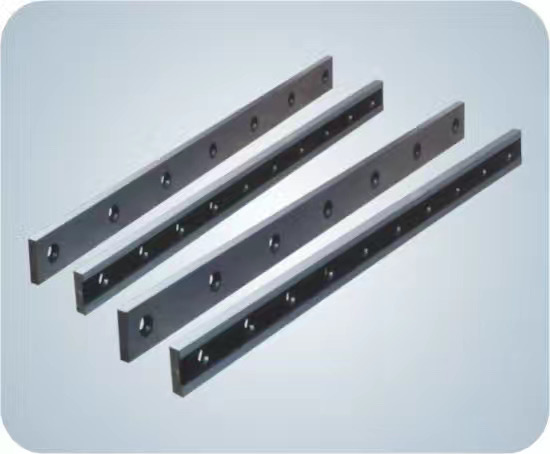
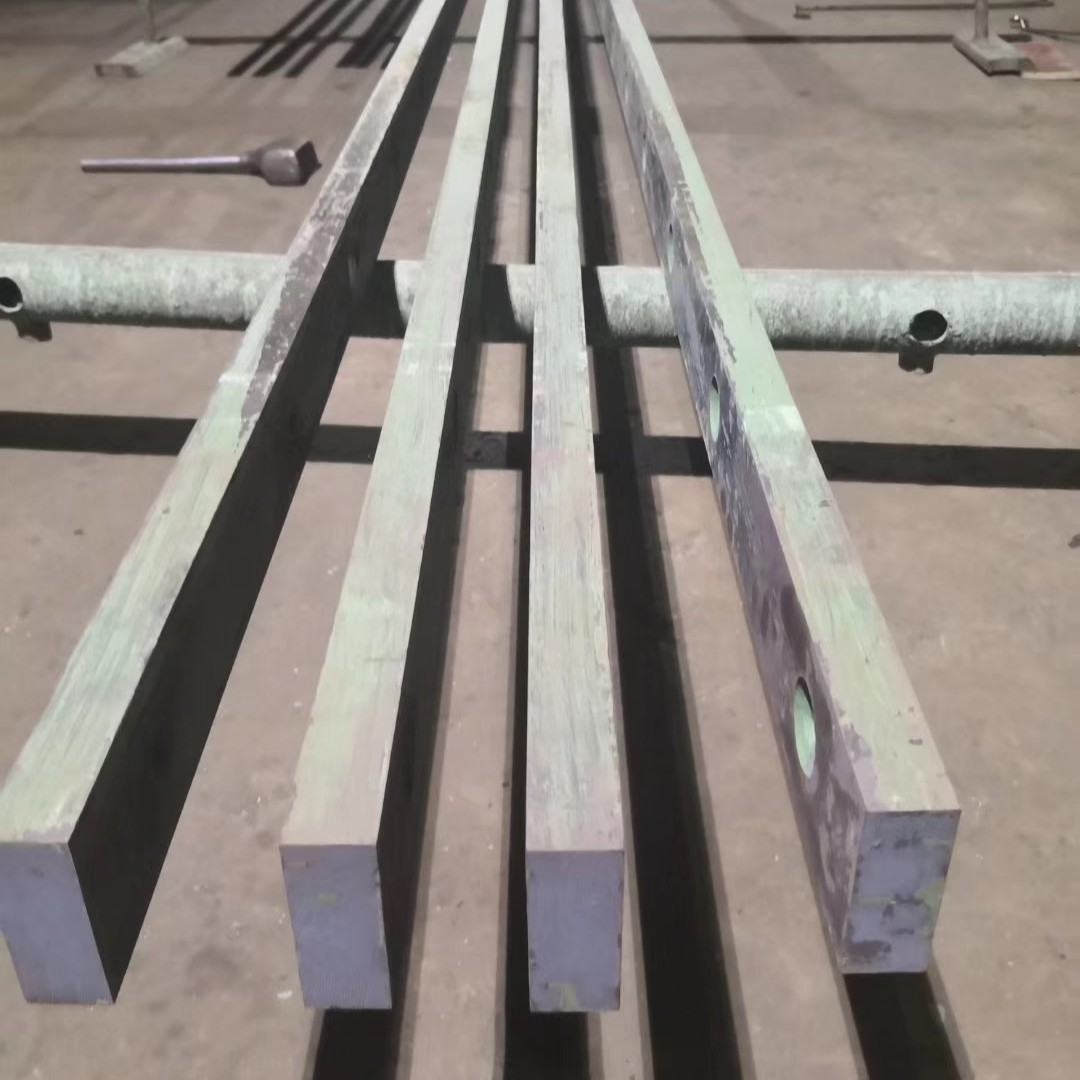
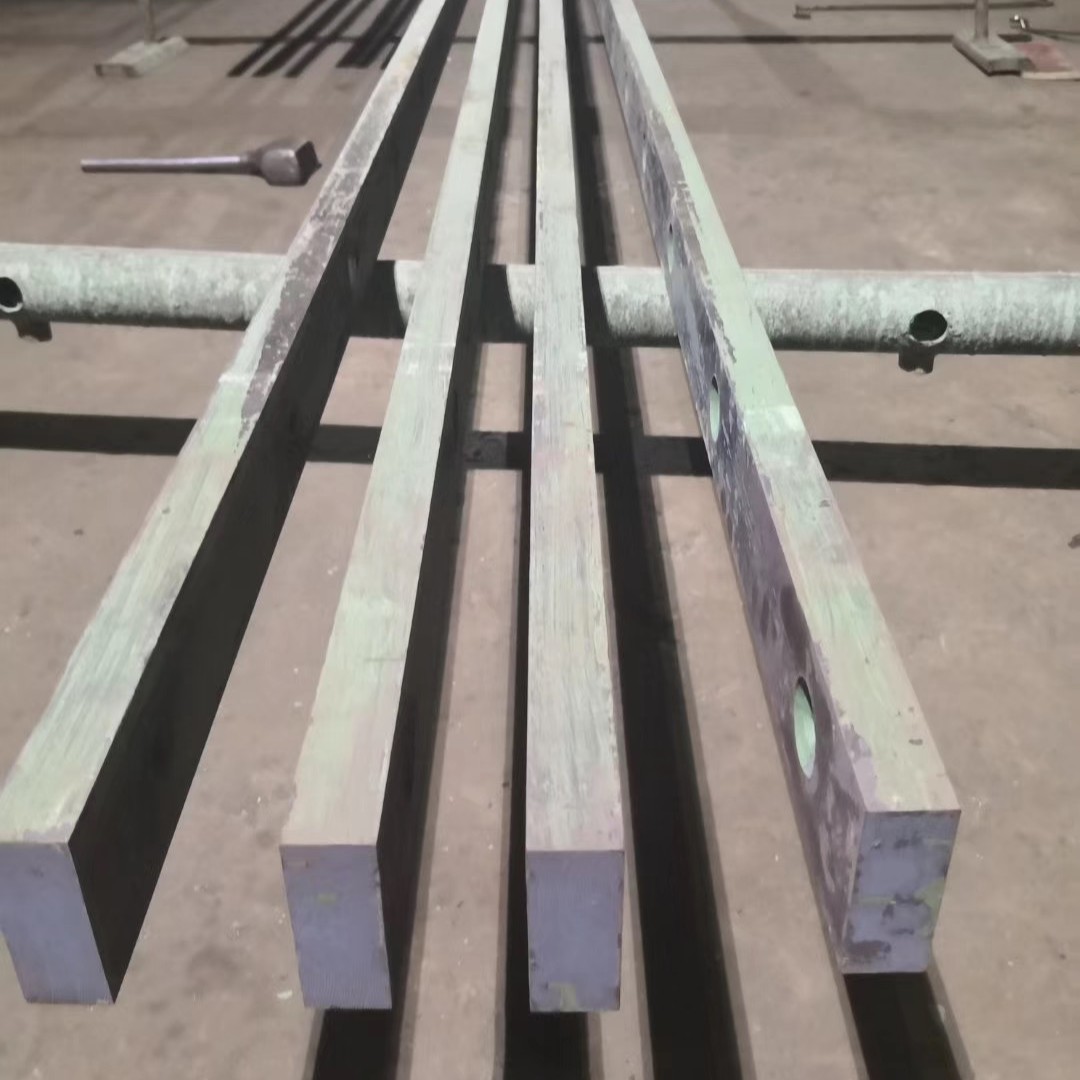
    W6-grade High-Speed Steel (HSS) is increasingly favored for shearing, planing, and rotary cutting blades due to its exceptional toughness and red hardness. However, most full-HSS blades are long and thin; coupled with high quenching temperatures, this often leads to significant deformation. Furthermore, their high tempering resistance makes traditional straightening extremely difficult. To address these challenges for long HSS blades, we utilize the Thermal Counter-Strike Correction method. By heating the blade to between 300°C and 450°C, the material achieves optimal plasticity under thermal conditions. Controlled hammering at this temperature allows for effective deformation and precise alignment. Licheng knife: We win over customers with professionalism.
    View More
  • The key advantages of Single Shaft Shredder Blades
    Mar 16, 2026 The key advantages of Single Shaft Shredder Blades
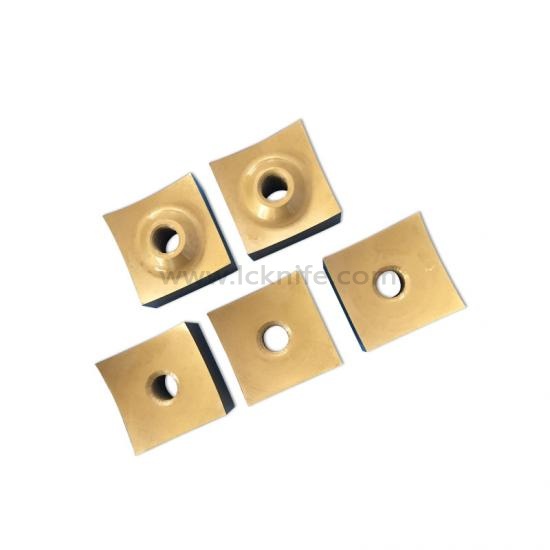
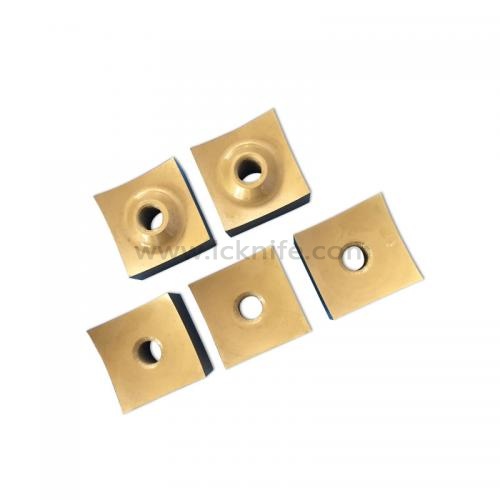
    The key advantages of Single Shaft Shredder Blades: 1. Four-Way Rotatable Design (Extended Lifespan)Four Cutting Edges: Most single shaft blades are square with a concave surface. This allows you to rotate the blade 90° once one edge becomes dull.Cost Efficiency: You essentially get four "new" blades for the price of one before needing a full replacement or regrinding. 2. Individual "Bolt-on" Replacement Localized Repair: Unlike double-shaft blades that are often integrated or stacked, single-shaft blades are bolted individually onto the rotor.Minimal Downtime: If you hit a piece of "tramp metal" (unshreddable debris) and chip a blade, you only need to replace that specific $10$-$20$ unit rather than dismantling the entire shaft assembly. 3. High-Performance Alloy Options Because these blades are smaller and modular, they can be manufactured from premium specialized steels to suit different materials:DC53 / D2 (SKD-11): Excellent for general plastics and high-wear applications.H13: Better for materials that generate higher heat.Tungsten Carbide Tipped: For extremely abrasive materials like glass-filled plastics. 4. Optimal Cutting Geometry Shearing Action: The blades act like scissors against the stationary counter-knives. This "clean cut" reduces dust (fines) and prevents the material from tearing or melting.Adjustable Gaps: The distance between the rotor blades and the counter-knives can be finely tuned to maintain sharp cutting performance as the blades wear down. 5. Concave Surface Design Aggressive Grabbing: The concave (hollow-ground) face of the blade creates a sharper angle, allowing the rotor to "bite" into hard blocks of plastic or wood more effectively than a flat blade.
    View More
  • Key Characteristics and Metallurgy of LD blades
    Mar 12, 2026 Key Characteristics and Metallurgy of LD blades
    LD (7Cr7Mo2V2Si) is a high-strength, high-toughness steel refined through vacuum carbon deoxidation. It was originally developed by adjusting the alloying elements of the patented cold-work die steel, SVSCO-DIE. Key Characteristics and Metallurgy High Austenite Alloying: The steel features a high degree of austenitic alloying, leading to a significant secondary hardening effect. Optimized Carbon Content: Its carbon content is lower than the "Balanced Carbon" rule recommended by G. Steven. This specific chemistry allows the steel to maintain high hardness without sacrificing impact toughness. Alloying Elements (Cr, Mo, V): The addition of Chromium, Molybdenum, and Vanadium facilitates secondary hardening, ensuring superior strength and excellent wear resistance. Performance and Applications Performance Comparison: LD steel outperforms W6 and offers several times the wear resistance of 9CrSi and Cr12MoV.
    View More
  • Brief introduction of single shaft shredder blade
    Mar 12, 2026 Brief introduction of single shaft shredder blade
    Single shaft shredder blade is an industrial cutting tool installed on the single shaft shredder rotor (spindle), specially used to tear, shear and crush various waste materials, such as plastic blocks, wood boards, rubber products, thin metal sheets, cardboard and so on.In industrial production, they determine the processing capacity and efficiency of shredders, especially suitable for the recycling and reuse of materials such as plastic, rubber, wood, and metal.
    View More
  • The uncoiling and cross-cutting production line has a high cutting speed and efficiency
    Mar 09, 2026 The uncoiling and cross-cutting production line has a high cutting speed and efficiency
    The uncoiling and cross-cutting production line has a high cutting speed and efficiency. For a fixed length of 2 meters, it can cut 25-35 times per minute, and for a length of ≤500mm, it can reach as many as 80 cuts per minute. In addition, the uncoiling and cutting material diversity is wide, including low-yield-strength tinplate and galvanized sheet, as well as high-strength stainless steel, weathering steel, and high-strength automotive plates. The work intensity of uncoiling and cross-cutting is high; some factories operate 2-3 shifts, cutting 10,000 to 20,000 times per day! This places extremely high demands on the durability and applicability of the cutting blades. The selection of blade materials and heat treatment process is paramount, but the precision manufacturing process of the blades is many times more sophisticated and complex than that of ordinary shearing blades.
    View More
  • Happy International Women's Day to every woman!
    Mar 08, 2026 Happy International Women's Day to every woman!
    To Every Radiant Woman: A Tribute to International Women's Day As the warmth of spring begins to bloom, we welcome a day dedicated to honoring both gentleness and strength. Womanhood has never been defined by a single color. She is the decisive leader in the boardroom, the steadfast anchor of the family, and the dreamer who never stops chasing the light. On this day, we are not just celebrating a gender; we are honoring an uncompromising spirit of resilience and independence. May you have the strength to "grow upward": Stand tall like a tree to touch the distant stars—unbound by definitions and unconstrained by limits. May you find the peace to "look inward": Regardless of the noise outside, always keep a heart that loves itself fiercely and embraces every facet of who you are. Happy International Women's Day to every woman! May your eyes sparkle with laughter and your dreams be filled with light. May your efforts be rewarded and your life be filled with love. Through the long passage of time, may you be more than just someone’s shield—may you forever be your own radiant self.
    View More
  • Reasonable forging of the cutting blade material can break the columnar crystals
    Mar 05, 2026 Reasonable forging of the cutting blade material can break the columnar crystals
    Reasonable forging of cutting-edge materials can break up columnar grains, reduce macrosegregation, transform the as-cast structure into a forged structure, and, under appropriate temperature and stress conditions, weld internal voids to improve the material’s density. After forging, the ingot forms a fibrous structure. Through further rolling, extrusion, and die forging, the forging obtains a rational distribution of fiber flow direction. Forging also helps to control grain size and uniformity, improve the distribution of secondary phases (such as alloy carbides in ledeburitic steels), and achieve deformation strengthening or deformation–phase transformation strengthening of the microstructure.
    View More
  • Scrap metal shearing requires high quality shear blades
    Mar 05, 2026 Scrap metal shearing requires high quality shear blades
    Scrap metal shearing operates under harsh working conditions, which places high demands on the quality of the shear blades, particularly in terms of strength and toughness. H13 is an alloy tool steel. Because it contains a large amount of alloying elements, it has excellent hardenability. After quenching, a considerable amount of retained austenite often remains in the microstructure. This retained austenite continues to transform into martensite only during the cooling process after tempering, which is known as “secondary quenching.” After the first tempering, the formation of new martensite generates new internal stresses. In addition, some retained austenite may still remain untransformed. Therefore, a second tempering or even a third tempering treatment is required. The tempering temperature is generally between 550–600°C, and the tempering time depends on the furnace load and the effective thickness of the blades.
    View More
first page 1 ... 6 7 8 9 10 11 12 13 last page

A total of 13 pages

Newsletter

Please read on, stay posted, subscribe, and we welcome you to tell us what you think.

Leave a message
welcome to Licheng
If you are interested in our products and want to know more details,please leave a message here,we will reply you as soon as we can.

Home

Products

about

contact